
In the world of culinary staples, few ingredients spark as much discussion as rice. For centuries, this versatile grain has nourished billi...
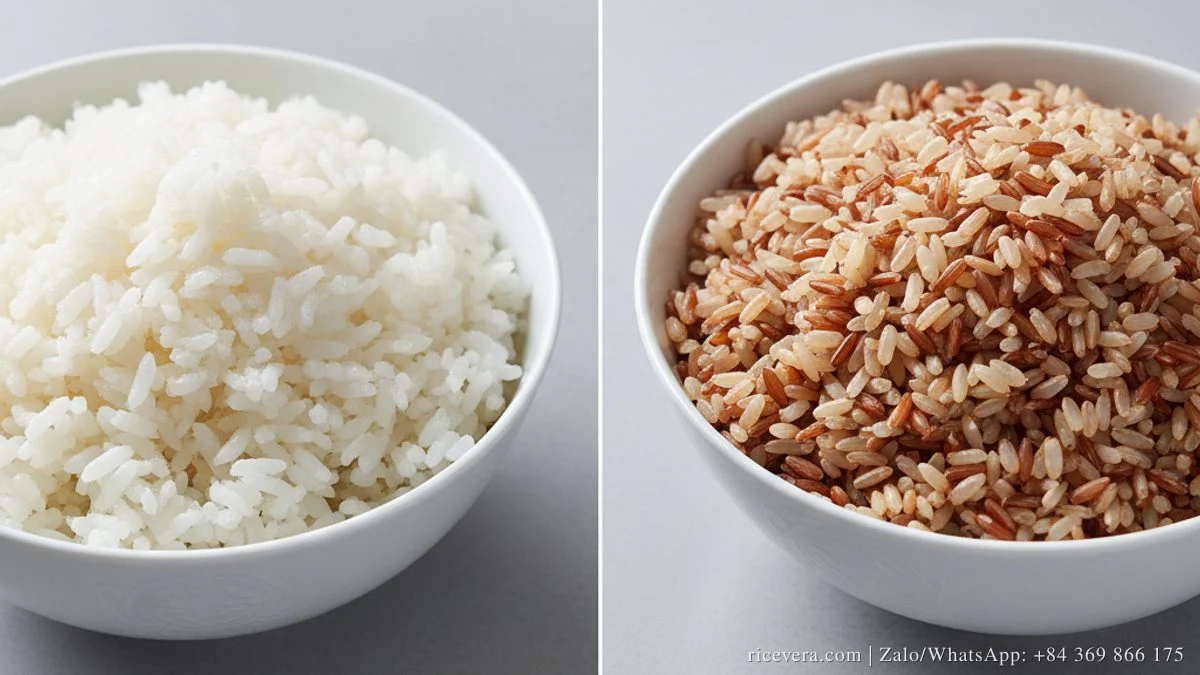
In the world of culinary staples, few ingredients spark as much discussion as rice. For centuries, this versatile grain has nourished billions, standing at the heart of countless cuisines and cultures. Yet, a persistent debate often arises at the dinner table: brown rice vs white rice? At RiceVera, where we celebrate "The Essence of Vietnam’s Finest Grains" from the pristine Mekong Delta, we understand that true appreciation comes from understanding. Let us delve into a refined rice nutrition comparison, exploring the nuances that differentiate these two cherished forms of a single grain.
The Fundamental Difference: Unpacking the Grain
To truly appreciate the distinction between brown and white rice, one must first understand the anatomy of a rice grain itself. Each grain, in its natural state, comprises three primary layers:
- The Bran: This is the hard outer layer, rich in fiber, minerals, and antioxidants.
- The Germ: Located at the core, the germ is packed with B vitamins, minerals, proteins, and healthy fats. It is essentially the embryo of the grain, capable of sprouting into a new plant.
- The Endosperm: This is the largest part of the grain, consisting mostly of carbohydrates (starch) and a small amount of protein. It serves as the food supply for the germ.
The Milling Process: From Paddy to Plate
The key to understanding the difference lies in the processing:
- Brown Rice: When paddy rice is harvested, it undergoes minimal processing. Only the outermost layer, the inedible hull, is removed. This means that the nutritious bran and germ layers remain intact, giving brown rice its characteristic nutty flavor, chewy texture, and distinctive brownish hue. It is, by definition, a wholegrain.
- White Rice: To produce white rice, the milling process is more extensive. After the hull is removed, the bran and germ layers are polished away, leaving behind only the starchy endosperm. This process results in a grain that is softer, cooks faster, and has a longer shelf life due to the removal of the fat-containing germ, which can go rancid. However, it also means a significant portion of the natural fiber and micronutrients are lost.
A Closer Look at Nutritional Profiles: Brown Rice vs White Rice
The difference in processing naturally leads to varying nutritional compositions. While both are excellent sources of carbohydrates for energy, a detailed rice nutrition comparison reveals why many consider wholegrain vs white rice a significant dietary choice.
Fiber Content: The Digestive Advantage
Perhaps the most widely recognized difference is fiber. Brown rice, retaining its bran layer, is significantly richer in dietary fiber compared to white rice. Fiber is crucial for digestive health, aiding in regular bowel movements, preventing constipation, and promoting a feeling of fullness, which can be beneficial for weight management. Moreover, soluble fiber can help in managing cholesterol levels.
Micronutrients: A Wealth of Vitamins and Minerals
The bran and germ are powerhouses of micronutrients. As such, brown rice typically contains higher levels of:
- B Vitamins: Thiamine (B1), Niacin (B3), Pyridoxine (B6) – essential for energy metabolism and nervous system function.
- Minerals: Magnesium (vital for muscle and nerve function, blood sugar control), Phosphorus (bone health, energy production), Selenium (antioxidant), Manganese (bone formation, metabolism).
- Antioxidants: Including phenolic compounds, which help protect the body's cells from damage.
While white rice does lose many of these during milling, much of the white rice available today is "enriched," meaning some B vitamins (like thiamine, niacin, and folic acid) and iron are added back. However, it still typically lacks the magnesium, phosphorus, and fiber found naturally in brown rice.
Glycemic Index (GI): Understanding Blood Sugar Impact
The Glycemic Index (GI) measures how quickly a food raises blood sugar levels. Generally, brown rice has a lower GI than white rice. This is primarily due to its higher fiber content, which slows down the digestion and absorption of carbohydrates, leading to a more gradual rise in blood glucose. This can be particularly beneficial for individuals managing blood sugar levels or seeking sustained energy release.
White rice, with its carbohydrates more readily available, tends to have a higher GI. However, it's crucial to remember that the GI of a meal is influenced by all its components. Pairing white rice with protein, healthy fats, and vegetables can significantly lower the overall glycemic load of a meal.
Calorie Content: A Minor Distinction
When it comes to calories, the difference between brown and white rice is negligible per serving. Both provide similar caloric energy, primarily from carbohydrates. The perceived benefit of brown rice in weight management often comes from its higher fiber content, which contributes to satiety, rather than a significant calorie deficit.
Beyond Nutrition: Culinary Considerations
Taste and Texture: A Sensory Journey
- Brown Rice: Offers a distinct, earthy, nutty flavor and a chewier, firmer texture. It holds its shape well and adds a robust character to dishes.
- White Rice: Possesses a more delicate, neutral flavor profile and a softer, fluffier texture when cooked. It readily absorbs the flavors of accompanying sauces and ingredients, making it incredibly versatile.
Cooking Time: Patience vs. Expediency
- Brown Rice: Due to its intact bran layer, brown rice requires more water and a longer cooking time—typically around 35-45 minutes.
- White Rice: The absence of the bran and germ allows white rice to cook much faster, usually within 15-20 minutes.
Shelf Life: Storage and Freshness
- Brown Rice: The healthy oils present in the germ layer mean brown rice has a shorter shelf life, typically around 6 months, and can benefit from refrigeration to prevent rancidity.
- White Rice: With the germ removed, white rice is much more stable and can be stored for extended periods, often years, in a cool, dry place without spoilage.
Comprehensive Comparison: Brown Rice vs White Rice
To summarize, here is a concise overview of the differences:
| Feature | Brown Rice | White Rice |
|---|---|---|
| Milling Process | Hull removed; bran and germ retained. | Hull, bran, and germ removed; polished. |
| Fiber Content | Higher | Lower (minimal) |
| Micronutrients | Higher (B vitamins, Magnesium, Selenium, Phosphorus, Manganese) | Lower (often enriched with some B vitamins and iron) |
| Glycemic Index (GI) | Lower to medium | Medium to higher |
| Calories (per serving) | Similar | Similar |
| Taste & Texture | Nutty, earthy, chewy, firm | Delicate, neutral, fluffy, soft |
| Cooking Time | Longer (35-45 minutes) | Shorter (15-20 minutes) |
| Shelf Life | Shorter (6 months, refrigerate for longer) | Longer (years) |
Dispelling Myths: The Nuance of "White Rice is Bad"
The question of "is brown rice healthier?" often leads to an oversimplified conclusion that white rice is inherently "bad." This perspective overlooks context, tradition, and individual needs. For centuries, white rice has been a cornerstone of diets worldwide, sustaining populations and enriching culinary traditions. It is highly digestible, making it a suitable choice for those with sensitive digestive systems
Experience the RiceVera Difference
From the fertile Mekong Delta to fine tables around the world, RiceVera delivers sustainably grown, premium-grade rice that meets the most demanding international standards.
For wholesale, export & private-label inquiries:
- ✉️ Email: info@ricevera.com
- 📱 Phone / WhatsApp / Zalo: +84 369 866 175
- 🌐 Website: ricevera.com
RiceVera Co., Ltd — A member of Gold Group | Head Office: 32 Pho Quang, Tan Son Hoa, Ho Chi Minh City, Vietnam


COMMENTS